What We Do

Services

Here's the full list of concrete work we take on, from a brand new driveway to a slab somebody else poured wrong.

Home › Services

Everything we take on

Every job below is one we do ourselves across Tucson.

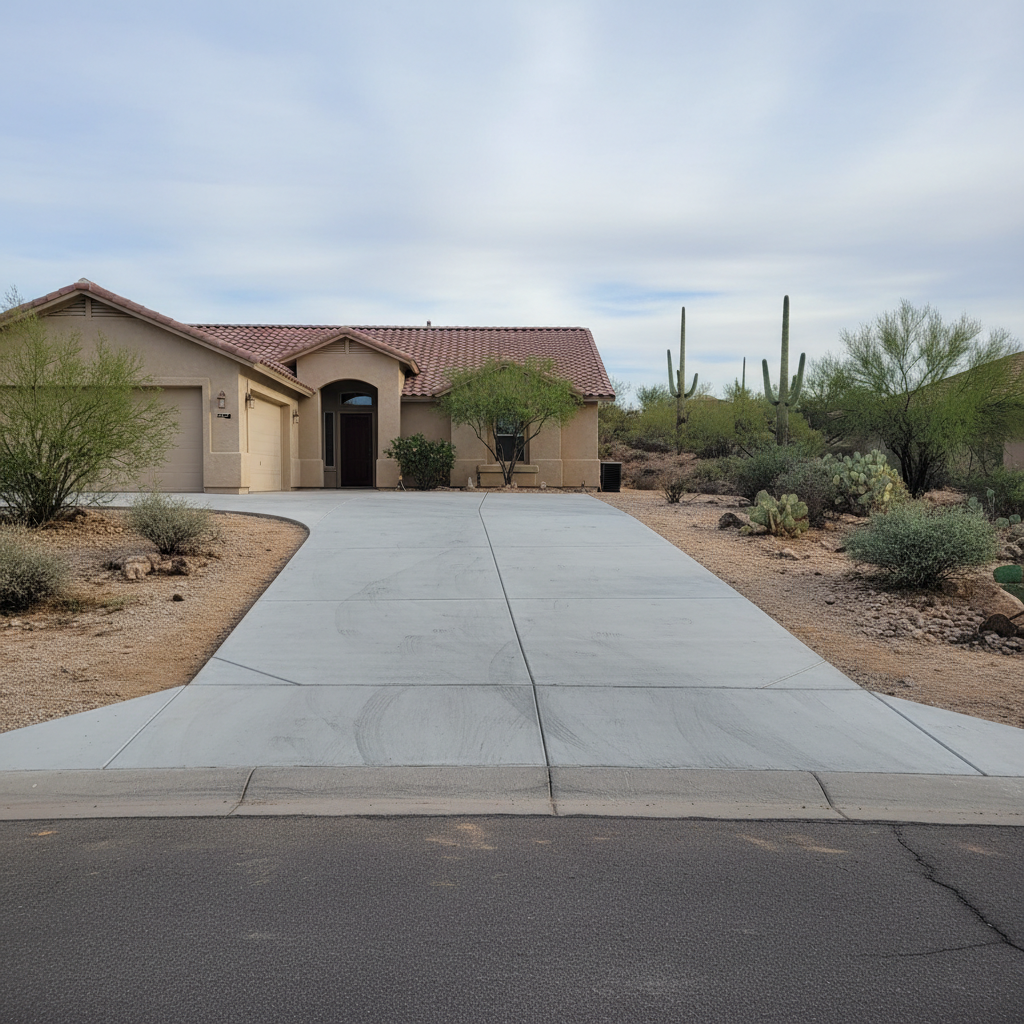
Concrete Driveways

We pour driveways four to six inches thick depending on what's parking on them, with rebar tied in rather than mesh laid loose. Base prep matters more than the pour itself out here, so we compact the sub-grade before any concrete goes down. Expect to stay off it for about a week before you're driving on it.

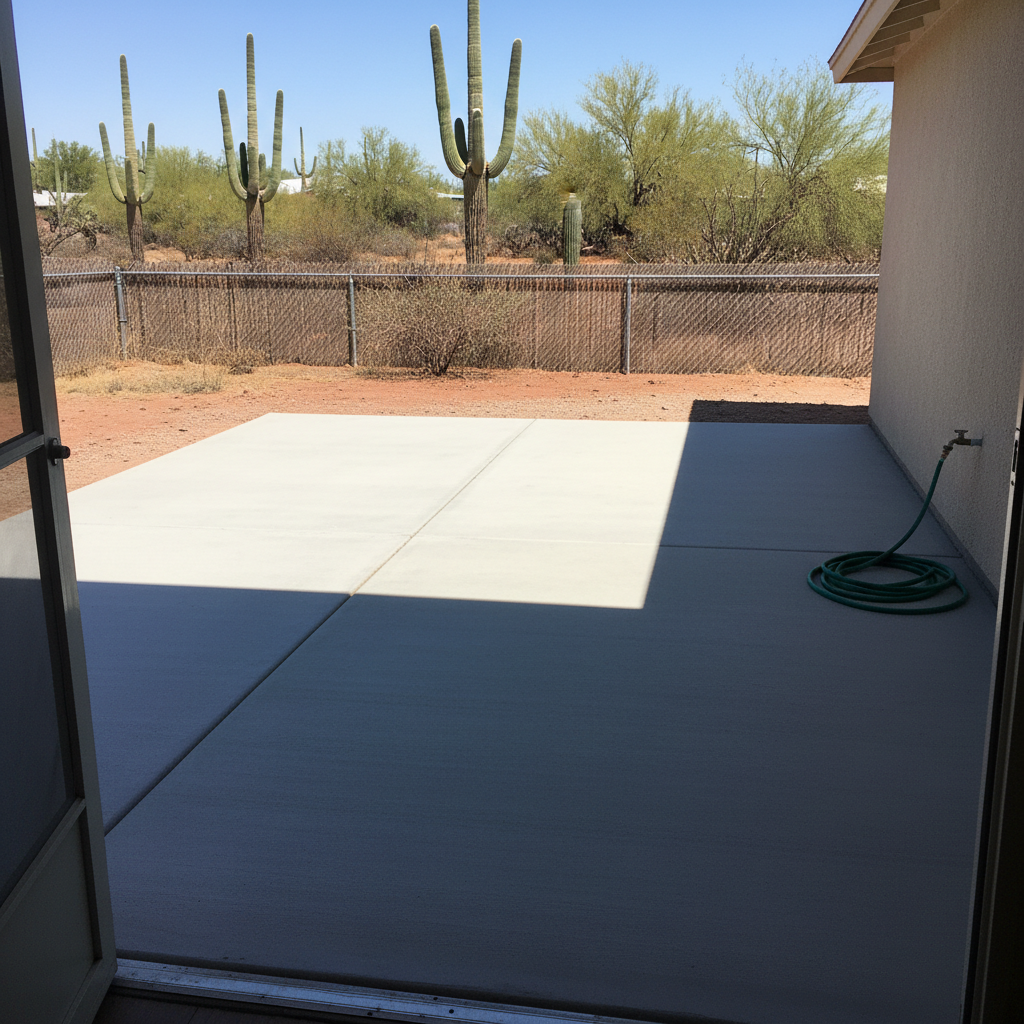
Concrete Patios

Patios get a broom finish or a stamped pattern, sloped away from the house so monsoon rain doesn't sit against your foundation. We set control joints to match the pattern so cracking happens where it's supposed to, not across the middle of a stamped design.

Stamped Concrete

We press a pattern into the slab while it's still plastic, then seal it so the color holds up under direct sun. Flagstone and ashlar slate are what most people around here ask for. It costs more than plain concrete but a lot less than real stone, and it doesn't grow weeds between the joints.

Concrete Repair

Cracked, sunken or spalling concrete usually comes from soil movement underneath, not bad concrete on top. We cut out the damaged section, deal with the soil, and tie new rebar into the old slab instead of just skimming a patch over it.

Concrete Slabs

Shed pads, garage floors, equipment pads, poured flat and level to whatever thickness the load calls for. We grade and compact the ground first so the slab doesn't settle unevenly in a year.

Decorative Concrete

Integral color mixed into the batch, exposed aggregate, or a broom finish with a border, whatever fits the house. This one's mostly about what you want it to look like, so we'll walk you through samples before we pour anything.

Concrete Sidewalks & Walkways

Narrow pours still need proper joint spacing and a broom finish for traction, especially near a pool or entryway. We match the thickness and finish to whatever's already on the property if you're extending an existing walkway.

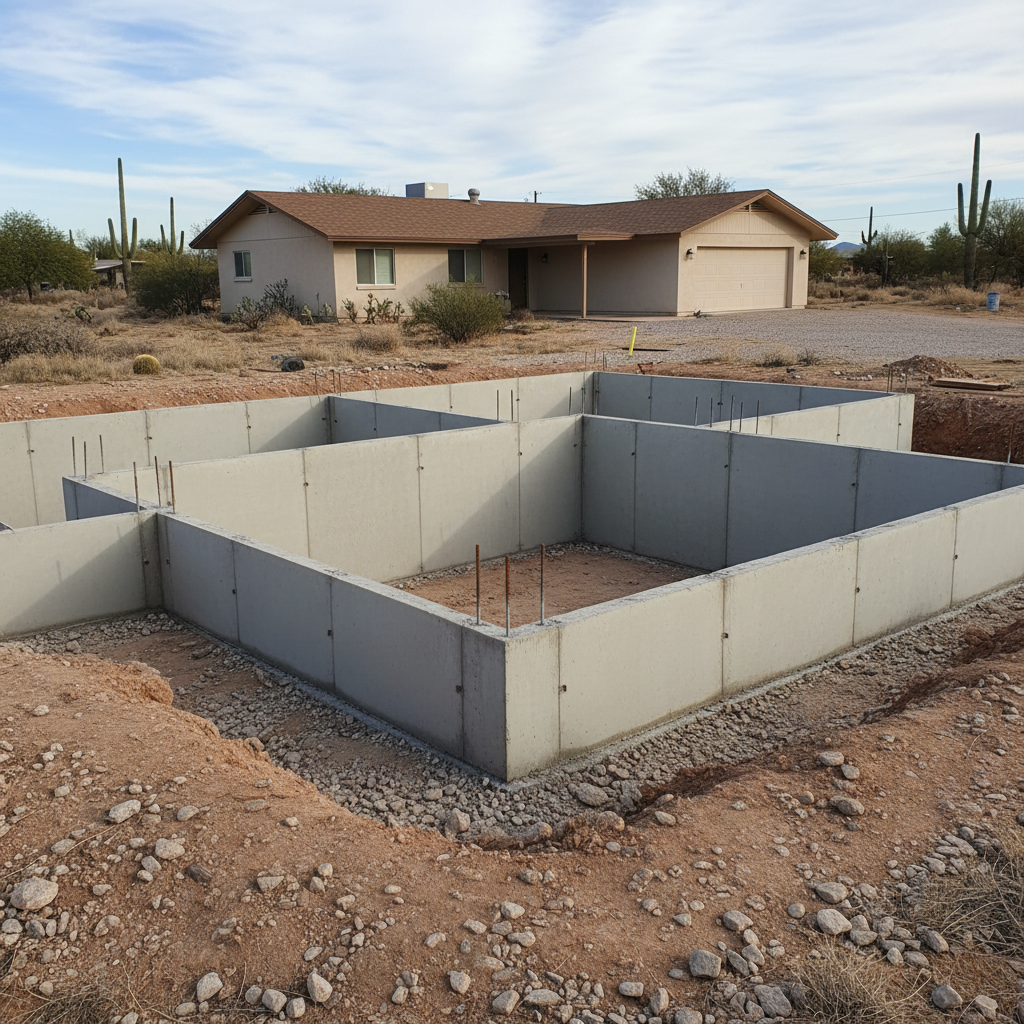
Concrete Foundations

Footings and foundation slabs for additions, casitas and small structures, poured to the depth your soil report calls for. We work off engineered plans when a job calls for them and pull the permit before we touch the ground.

Concrete Resurfacing

If the slab underneath is still structurally sound, we can overlay it instead of tearing it out, which saves you the demo cost. It won't fix a cracked or heaved slab, just covers up surface wear like spalling or faded color.

Retaining Walls

Smaller retaining walls to hold back a graded slope or terrace a yard, poured or block depending on the height and the soil behind it. Anything over a few feet usually calls for drainage built in behind it so water pressure doesn't push the wall out.

How It Works

Four steps, and no surprises in any of them.

01

We come and look

You tell us what you want doing, we look at what is actually there, and we ask the awkward questions early.

02

You get a price

In writing, itemised, free. If something might add cost later we flag it now rather than at the end.

03

We do the work

Same crew throughout. We cover your floors, keep the dust down and tidy up before we leave each day.

04

We walk it with you

You point out anything you are not happy with and we fix it before the invoice, not after.

Where We Work

All of this, across Tucson, AZ

Concrete crews run out to these areas on a regular basis, not just Tucson proper.

Tucson, AZ
Casas Adobes, AZ
Marana, AZ
Catalina Foothills, AZ
Oro Valley, AZ
Sahuarita, AZ
Green Valley, AZ
Catalina, AZ
Vail, AZ
Corona de Tucson, AZ
South Tucson, AZ
Common Questions

Things worth asking

Questions that come up once a concrete project is actually underway.

Do I need a permit for a new driveway or patio slab?
Permit requirements depend on the city or county and the size of the project, with larger driveways, additions or anything attached to a structure more likely to require one. Permits typically get pulled once the design and dimensions are finalized.
How long does it take to pour and finish a concrete driveway or patio?
Forming and pouring a standard driveway usually takes one to two days, with the slab requiring about three to five days before foot traffic and closer to a week before vehicles drive on it. Larger patios with stamped patterns or multiple pours can stretch that timeline out further.
Can concrete work be done on a tighter budget?
Plain broom-finished concrete costs less than stamped or exposed aggregate finishes, and reducing thickness or square footage where the load allows can bring a quote down. Cutting corners on rebar or sub-grade prep to save money isn't recommended, since that's what tends to cause cracking later.
What kind of guarantee comes with the concrete work?
Workmanship is covered under warranty for a set period after the pour, covering issues like improper curing or finish defects, separate from normal weather-related cracking that all concrete experiences over time. Specific warranty terms are outlined in the written quote before the job starts.
Who do I talk to day to day once the project starts?
One point of contact handles scheduling and questions throughout a concrete project, so there's no chasing down different people for updates. That same person coordinates with the crew doing the actual forming, pouring and finishing.
What materials do you use for driveways versus patios?
Driveways generally get a higher-strength mix and rebar to handle vehicle weight, while patios can often use a lighter mix with rebar or mesh depending on how the space gets used. Decorative finishes, color additives and sealers get selected separately based on the look wanted.
Do I need to move out or stay off the property during the work?
Staying in the house during a driveway or patio pour is normal, since the work happens outside and doesn't affect utilities or interior access. The main disruption is noise from equipment and needing to park elsewhere until the new concrete cures enough to drive on.
What should I do to prepare the site before the crew arrives?
Moving vehicles, patio furniture and anything stored in the work area ahead of time speeds up the job and avoids delays on pour day. Sprinkler lines or buried utilities in the area should be flagged during the estimate so they aren't hit during excavation.
What happens if you find a problem with the soil or an old slab mid-project?
If the sub-grade soil turns out to be unstable, or an old slab being replaced has more damage underneath than expected, the scope and cost get discussed before continuing. Addressing soil problems properly at that point is better than pouring over them and having the same issue return.
How do I take care of new concrete after it's poured?
New concrete has to cure for about a week before heavy use and shouldn't be sealed too early, since sealing before it's fully cured can trap moisture. After that, periodic resealing every couple of years and keeping control joints clear of debris helps a slab last longer and crack where it's designed to.

Not sure what you need?

Describe the problem and we will tell you what it probably is. No obligation.
Call (520) 379-7465